
Trial Overview
iSPOT-D (International Study To Predict Optimized Treatment in Depression) was a landmark $16M clinical trial designed to identify objective, multi-modal biomarkers that can predict which patients with Major Depressive Disorder (MDD) will respond to which antidepressant medication — before treatment begins.
The trial enrolled N = 1,008 depressed patients in the primary (training) cohort and N = 704 in an independent replication set, alongside N = 336 healthy controls. Participants were randomized to one of three of the most commonly prescribed antidepressants:
- Escitalopram (Lexapro)
- Sertraline (Zoloft)
- Venlafaxine-XR (Effexor)
Controls were not medicated. All participants were tested before and after 8 weeks of treatment, with follow-up assessments at 16, 24, and 52 weeks.
Integrative Data Collection
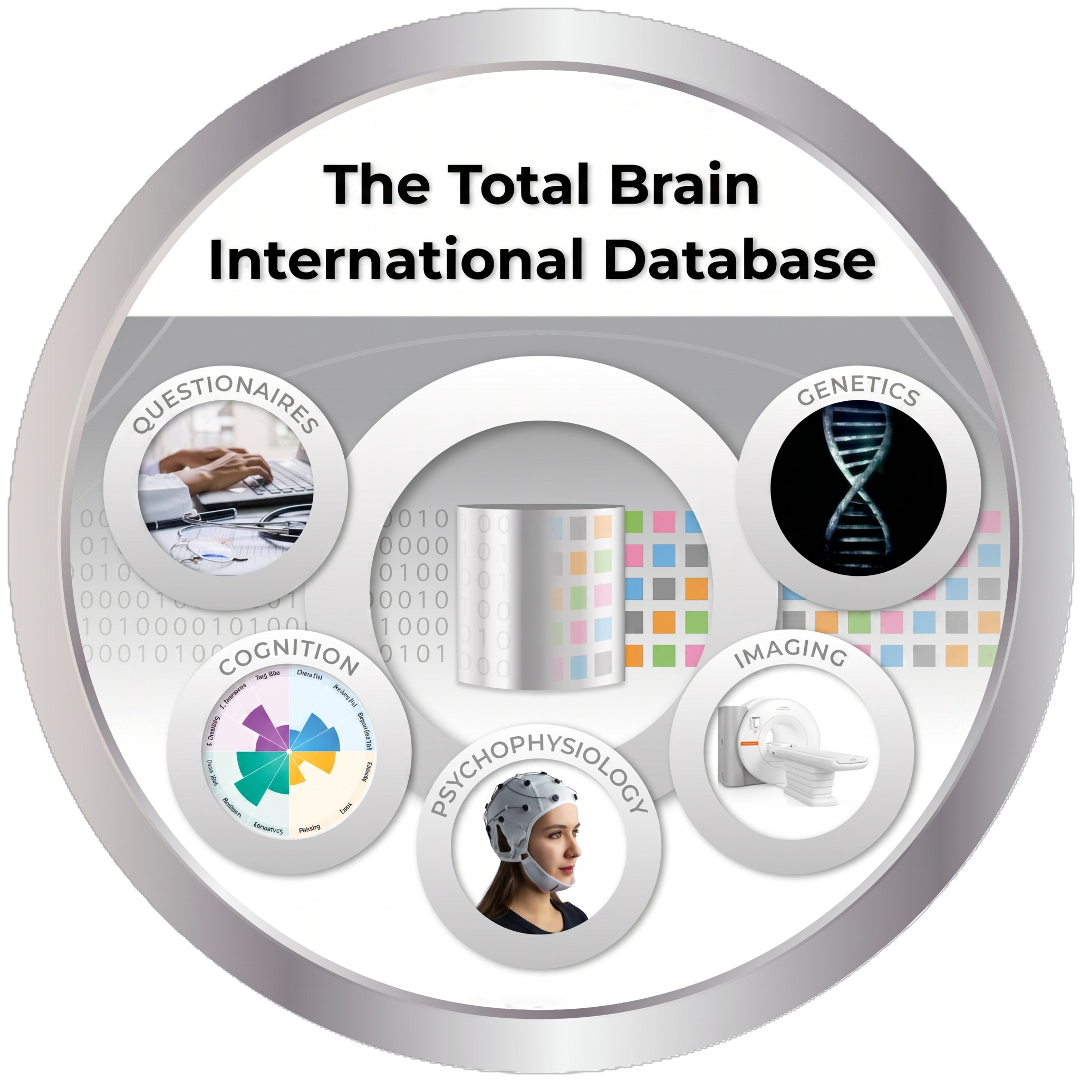
iSPOT-D collected a comprehensive multimodal dataset at baseline and at 8 weeks, making it one of the most deeply phenotyped clinical trials in psychiatric history. Data modalities included:
Clinical & Questionnaire
HRSD17, QIDS-SR16, DASS (Depression, Anxiety, Stress), MINI-Plus (comorbidities), ADDS and CORE (depression subtypes), SOFAS (social functioning), BRISC (self-regulation), ERQ (emotion regulation).
Cognitive Performance
Full 14-test standardized cognitive battery covering speed, attention, memory, cognitive control, executive function, and emotional cognition — the same battery used across all Total Brain Database groups.
Psychophysiology
EEG resting state (eyes open and closed), auditory habituation, P300, Go/No-Go, choice reaction time, and event-related potentials — capturing neural dynamics at millisecond resolution.
Genomics
Blood samples for genomic analysis of ~700 SNP variants, enabling gene–biomarker–treatment response analyses. N = 1,507 patients with genetic data.
Neuroimaging
Structural and functional MRI scans in a subset of approximately 10% of the sample (N = 226 with imaging data), allowing identification of neural biomarkers of treatment response.
Symptom Tracking
Symptom and side effect information collected at 4 time intervals between baseline and the 8-week return visit, plus further follow-up at 16, 24, and 52 weeks.
Standardized Multi-Site Protocol
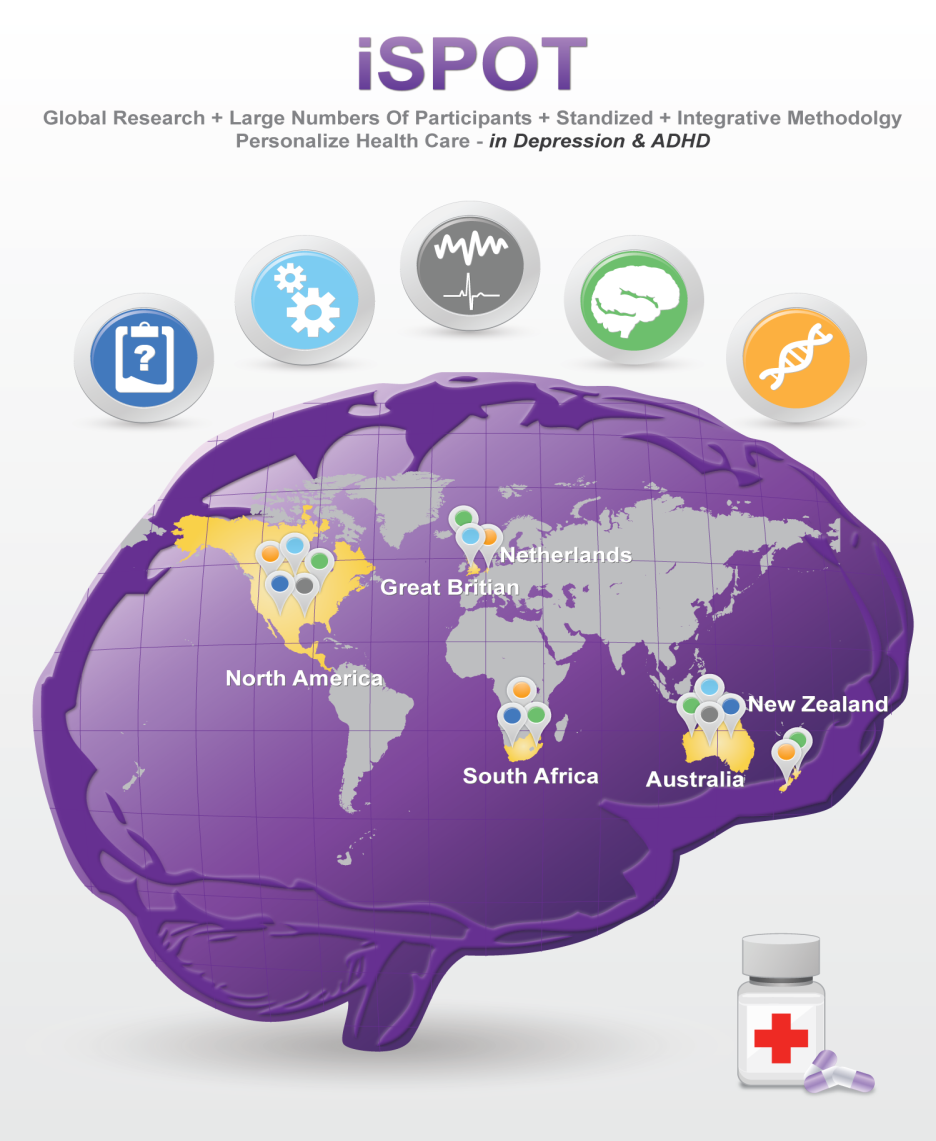
A standardized testing protocol was administered across all 18 site locations in 5 countries (USA, Australia, Netherlands, UK, and South Africa), ensuring that data from different sites can be directly pooled and compared. This standardization — rare in clinical psychiatry — is what makes the iSPOT-D dataset an exceptionally powerful resource for biomarker discovery.
The use of the same cognitive and psychophysiology test battery as the broader Total Brain normative database means that iSPOT-D patients can be directly compared against the normative cohort of N = 400,000+, enabling precise quantification of clinical deviation from healthy function at an individual level.
Key Findings
Over 40 peer-reviewed publications have emerged from the iSPOT-D trial. Key biomarkers and findings identified to date include:
- Cognitive speed and flexibility at baseline predict antidepressant remission outcomes.
- EEG alpha asymmetry is a gender-specific predictor of outcome to acute treatment with different antidepressants.
- Frontal theta EEG power (rostral anterior cingulate) predicts differential treatment outcome.
- ABCB1 gene variants are associated with differential response across the three antidepressants.
- Anxious vs. non-anxious depression subtypes show distinct baseline profiles and differential remission predictors.
- Structural imaging features (occipital bending, gray matter patterns) distinguish responders and non-responders.
- Prognostic models combining EEG, cognitive, and genomic data form part of regulatory submissions being prepared for the FDA.
Trial Registration & Key Publications
- ClinicalTrials.gov — NCT00693849: iSPOT-D Trial Registration. Full trial design, eligibility criteria, and outcome measures.
- Williams et al. (2011) — iSPOT-D, a pragmatic adaptive randomised controlled trial: rationale and protocol. Trials, 12:4. Full trial design paper.
- Palmer (2015) — Biomarkers for antidepressant treatment selection: iSPOT-D study. Current Behavioral Neuroscience Reports, 2:137–145. Review of biomarker findings.
For a complete list of all iSPOT-D publications, see the Publications tab and select "iSPOT-D A-Z" for the full reference list, or search "iSPOT" in the search bar.
iSPOT-A: ADHD Trial
A parallel trial — iSPOT-A (International Study to Predict Optimized Treatment in ADHD) — applied the same multi-modal biomarker approach to identifying predictors of stimulant treatment response in children and adolescents with ADHD. This trial enrolled N = 499 ADHD patients (6–18 years) and N = 336 healthy controls, tested before and after 6 weeks of stimulant treatment (methylphenidate).
Data includes the same cognitive and psychophysiology battery, genomics (N = 474), and structural imaging (N = 39). Key findings have informed cognitive profile markers for stimulant response, including age-dependent EEG alpha peak frequency and theta power patterns as biomarkers of stimulant non-response.
Get in Touch
For research partnerships & database licensing: evian.gordon@totalbrain.com